

Explore the Indosoft contact center glossary
Discover key terms and concepts shaping modern contact centers. Indosoft’s glossary simplifies AI, analytics, and routing to help you master smarter customer engagement.
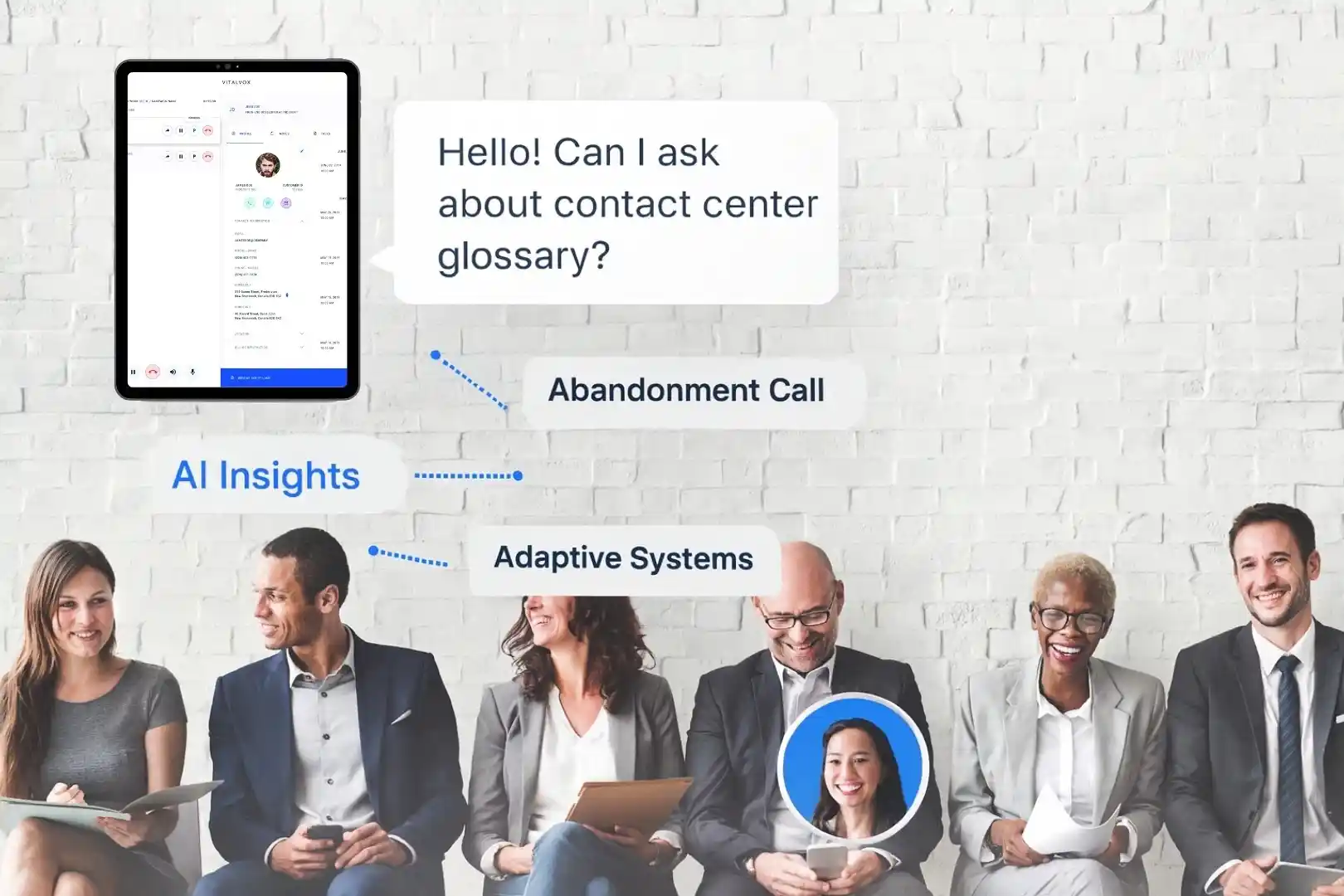
Abandoned Call
A customer call terminated before reaching an agent, commonly due to excessive hold times or dissatisfaction. Monitoring abandonment rates helps contact centers identify performance or staffing challenges.
Abandonment Rate
The abandonment rate shows how many callers hung up before speaking with an agent. It helps contact centers measure queue efficiency and identify long wait time or staffing issues.
Adaptive Systems
Dynamic technologies that adjust in real time to customer behavior, data, and interactions. In contact centers, adaptive systems enhance efficiency, optimize workflows, and deliver personalized customer experiences.
AI Audio
Audio content generated or enhanced using artificial intelligence, including speech synthesis, voice recognition, and real-time sound processing. In contact centers, AI audio enables natural voice interactions, speech analytics, and personalized customer communication.
After Call Work (ACW)
After Call Work refers to the post-call tasks agents complete—such as adding notes, tagging interactions, or sending follow-up messages. Indosoft streamlines ACW through a unified interface with smart automation and CRM integrations, reducing wrap-up time and improving agent productivity.
Agent Assist
Agent Assist is an AI-powered tool that supports contact center agents in real time by providing live guidance, sentiment analysis, call summaries, and contextual recommendations.
AI Call Tracking
AI Call Tracking leverages artificial intelligence to monitor, record, and analyze customer calls in real-time. It detects sentiment, key phrases, and call outcomes to evaluate agent performance and identify service trends.
AI Insights
AI Insights are data-driven findings generated through artificial intelligence that reveal customer behavior, operational trends, and performance patterns.
AI Transcription
AI transcription uses artificial intelligence to convert speech into text. With advanced speech recognition, it delivers accurate transcripts for meetings and calls, saving time and improving productivity.
Automatic Call Distribution (ACD)
An Automatic Call Distribution (ACD) system uses predefined rules to route incoming calls to the right agents or departments, reducing wait times and improving service efficiency.
Automatic Speech Recognition (ASR)
Automatic Speech Recognition (ASR) uses AI to convert spoken language into text in real time. It enables voice-driven applications, call analytics, and faster transcription in contact centers and communication platforms.
Auto Dialer
An auto dialer automates outbound calls by dialing numbers from a list and connecting agents only when someone answers. It streamlines operations with features like call scripting, reporting, and CRM integration to boost agent efficiency.
Blended Agent
A blended agent manages both inbound and outbound calls within a contact center. Supported by AI tools, they balance customer service and sales tasks efficiently, improving overall productivity and response times.
Business Process Automation (BPA)
Business Process Automation (BPA) uses AI, automated processes, and technology to streamline repetitive tasks and workflows in contact centers, improving efficiency, reducing errors, and enabling teams to focus on higher-value activities.
Bot Deflection
Bot deflection uses AI-powered chatbots to handle routine customer queries, reducing the need for human intervention. It helps contact centers lower workloads while maintaining quick and efficient customer support.
Business Continuity Plan (BCP)
A Business Continuity Plan (BCP) ensures contact center operations remain functional during disruptions. It includes backup systems, data recovery, and remote support strategies to minimize downtime and maintain customer service.
Busy Hour Call Attempts (BHCA)
Busy Hour Call Attempts (BHCA) measure the total number of calls a contact center handles or attempts during its busiest hour. This metric helps assess network performance and plan capacity effectively.
Benchmarking
Benchmarking in contact centers involves comparing performance metrics, such as call resolution time or customer satisfaction, against industry standards to identify improvement opportunities and enhance service quality.
Business Intelligence (BI)
Business Intelligence (BI) in contact centers refers to the use of analytics and reporting tools that transform raw data into actionable insights. BI dashboards help managers monitor KPIs like call volume, agent performance, and customer satisfaction to drive data-based decisions.
Busy Lamp Field (BLF)
Busy Lamp Field (BLF) is a telephony feature that indicates an agent’s call status—such as available, ringing, or busy—through visual signals. In contact centers, BLF improves collaboration, call transfers, and queue management efficiency.
Burst Handling
Burst handling is the contact center’s ability to manage sudden spikes in call or message volume. AI-powered routing, automatic call backs, and cloud scalability help maintain service quality during peak demand.
Behavioral Analytics
Behavioral analytics uses AI to analyze customer and agent behaviors—such as tone, sentiment, and response patterns—to predict outcomes and enhance service personalization. It’s key to improving satisfaction and training programs.
Bot Handoff
Bot handoff is the seamless transfer of a conversation from an AI chatbot to a human agent when advanced assistance is needed. Effective bot handoff ensures continuity, accuracy, and a better customer experience.
Billing and Reporting System
A billing and reporting system in contact centers tracks usage, agent activity, and customer interactions for accurate invoicing and performance analysis. Integrated AI tools help automate billing and generate detailed reports for transparency.
Call Analytics
Call analytics uses AI and data analysis to evaluate customer interactions, uncover trends, and measure agent performance. It helps contact centers improve efficiency and enhance customer experience.
Call Deflection
Call deflection redirects customers from phone calls to digital channels like chatbots or self-service portals. It reduces call volume and improves response times while maintaining service quality.
Call Intent Prediction
Call intent prediction uses AI to determine why a customer is calling before agent interaction. It enables smarter routing, faster resolutions, and a more personalized customer experience.
Chat Sentiment Analysis
Chat sentiment analysis uses AI to detect a customer’s emotions and tone during live chats. It helps agents respond with empathy, improve communication, and enhance overall customer satisfaction.
Conversational AI
Conversational AI uses technologies like chatbots and voice assistants to simulate human-like dialogue. It automates customer interactions, resolves queries, and enhances engagement across communication channels.
Contextual Routing
Contextual routing directs calls or chats based on customer history, preferences, and current needs. It ensures faster resolutions and more personalized service experiences.
Call Analytics
Call analytics uses AI and data analysis to evaluate customer interactions, uncover trends, and measure agent performance. It helps contact centers improve efficiency and enhance customer experience.
Call Deflection
Call deflection redirects customers from phone calls to digital channels like chatbots or self-service portals. It reduces call volume and improves response times while maintaining service quality.
Call Intent Prediction
Call intent prediction uses AI to determine why a customer is calling before agent interaction. It enables smarter routing, faster resolutions, and a more personalized customer experience.
Chat Sentiment Analysis
Chat sentiment analysis uses AI to detect a customer’s emotions and tone during live chats. It helps agents respond with empathy, improve communication, and enhance overall customer satisfaction.
Conversational AI
Conversational AI uses technologies like chatbots and voice assistants to simulate human-like dialogue. It automates customer interactions, resolves queries, and enhances engagement across communication channels.
Contextual Routing
Contextual routing applies logic to route calls or chats based on customer history, preferences, and current needs. It ensures faster resolutions and more personalized service experiences.
Dialed Number Identification Service (DNIS)
A telecommunication feature that identifies the specific phone number a caller dialed, enabling contact centers to route calls accurately, manage multiple campaigns, and deliver personalized customer experiences.
Dialplans
Configurations that define how outbound calls are structured, sequenced, and routed. In contact centers, dialplans optimize call distribution, ensure compliance, and improve agent productivity by automating call flows and prioritizing target lists.
Direct Inward Dialing (DID)
A telephony service that lets external callers reach specific extensions directly without going through a receptionist or main phone menu. In contact centers, DID enables personalized routing, faster connections, and improved caller experience.
Disposition
The label or status assigned to a call after it concludes—such as Resolved, No Answer, or Follow-up Required. Dispositions help contact centers track outcomes, measure agent performance, and improve workflow efficiency through detailed call analysis.
Dynamic Call Routing
An intelligent call distribution method that automatically adjusts routing decisions in real time based on factors like agent availability, caller data, and queue load. This ensures faster connections, balanced workloads, and improved customer satisfaction in contact centers.
Dynamic IVR
An interactive voice response (IVR) system that adapts menus and prompts in real time based on caller history, behavior, or account information. This personalization enhances customer experience, reduces call handling time, and improves first-call resolution in contact centers.
Echo Cancellation
Technology that eliminates echo and background feedback during calls to ensure clear, uninterrupted voice communication. Commonly used in VoIP systems and contact centers to enhance audio quality and customer experience.
Emotional AI (Affective Computing)
AI technology that analyzes tone, speech patterns, and language to detect human emotions in real time. In contact centers, it helps assess customer sentiment, guide agent responses, and improve overall service empathy and satisfaction.
Employee Engagement
Solutions that track agent performance, monitor behavior patterns, and provide actionable insights to boost motivation, productivity, and well-being. These tools help contact centers foster a positive, high-performing work environment.
End-to-End Encryption (E2EE)
A security protocol that encrypts data from the sender to the receiver, ensuring no third-party can access or alter communication content. In contact centers, E2EE safeguards sensitive customer and agent information during calls, chats, and data exchanges.
Engagement Scoring
Analytics that evaluate customer and agent engagement through voice tone, chat behavior, and interaction frequency. This helps contact centers assess satisfaction, identify improvement areas, and enhance service quality.
Feedback Analysis AI
AI-driven technology that processes and interprets customer feedback from multiple sources—such as surveys, reviews, and call transcripts—to uncover insights that improve service quality, customer experience, and operational strategies.
First Call Resolution (FCR)
The act of resolving customer issues during the first contact. It helps contact centers minimize repeat calls, enhance efficiency, and improve overall customer satisfaction.
Free-Text Speech Recognition
AI-driven speech recognition technology that converts natural, open-ended speech into text, allowing customers to interact with IVR systems more conversationally. It enhances self-service experiences and reduces call handling time.
Frontline Coaching
A real-time coaching system that listens to live calls and provides feedback or guidance to agents by either manual intervention or AI. It helps improve communication accuracy, compliance, and customer satisfaction by offering personalized performance insights.
Full-Duplex Voice Processing
Communication technology that enables simultaneous two-way speech transmission, allowing customers and agents to talk naturally without delays or interruptions. It improves conversation flow and call experience in real time.
Fuzzy Matching AI
AI-powered algorithm that identifies similar or approximate matches in text or speech, even when there are spelling errors or variations. In contact centers, it enhances chatbot understanding, search accuracy, and intent detection.
Global Queue Management
A system that manages and distributes calls across multiple locations or channels worldwide, ensuring balanced workloads and faster response times. It helps contact centers maintain consistent service quality across regions.
Guided Agent Assist (GAA)
An AI-powered tool that provides real-time prompts, knowledge base suggestions, and compliance reminders during live interactions. Guided Agent Assist helps agents resolve issues faster and deliver consistent service quality.
Generative AI for Customer Service
AI models that create human-like responses, summaries, or suggestions during live calls and chats. Generative AI enhances customer experience by providing fast, accurate, and context-aware communication.
Growth Analytics
Data-driven analysis of contact center performance, customer trends, and agent metrics to identify growth opportunities. Growth analytics empowers managers to make informed business decisions.
Green Contact Center
An environmentally conscious contact center model that uses cloud solutions, energy-efficient hardware, and remote work setups to reduce carbon footprint and operational costs.
Gamification in Contact Centers
The use of game-like elements—such as points, leaderboards, and rewards—to motivate agents, enhance performance, and increase engagement in contact centers. Gamification drives productivity while making daily tasks more enjoyable.
Hold Time Optimization
The process of reducing customer wait times during calls through AI-driven routing, callback options, and predictive staffing. Hold time optimization improves customer satisfaction and call efficiency.
Human Sentiment Analysis
AI-driven technology that interprets emotions in customer voice or text interactions. Human sentiment analysis helps agents respond empathetically and improve customer satisfaction.
Hyper-Personalization
The use of AI and analytics to deliver individualized customer experiences based on real-time data, past behavior, and preferences. Hyper-personalization enables contact centers to tailor every conversation for maximum impact.
High Availability (HA)
A system design that ensures continuous uptime and minimal service disruption. In contact centers, high availability supports 24/7 operations through redundant servers, cloud architecture, and automatic failover systems.
Hybrid Cloud Contact Center
A deployment model combining on-premise infrastructure with cloud-based solutions. Hybrid cloud contact centers offer flexibility, scalability, and secure data handling—ideal for businesses transitioning to digital operations.
Helpdesk Automation
AI and workflow automation that streamlines ticket management, routing, and resolution in customer support environments. Helpdesk automation reduces manual effort and improves response speed.
Inbound Call Routing
The process of directing incoming calls to the most appropriate agent or department based on predefined rules or AI-driven insights. Inbound call routing ensures faster response times and improved customer satisfaction.
Interactive Voice Response (IVR)
An automated telephony system that interacts with callers through voice menus and keypad inputs. Modern IVR systems use AI and natural language processing to provide personalized, self-service support.
Integration Platform as a Service (iPaaS)
A cloud-based solution that connects various contact center applications, such as CRM, helpdesk, and communication tools. iPaaS simplifies data sharing and enhances workflow automation.
Intelligent Call Routing (ICR)
An AI-driven system that analyzes caller intent, history, and agent performance to direct calls to the best available representative. Intelligent call routing increases first-call resolution and reduces handling time.
Intelligent Virtual Agent (IVA)
An AI-powered chatbot or voicebot that interacts with customers using natural language understanding. IVAs handle routine queries, freeing human agents for complex issues and reducing wait times.
Idle Time Management
Techniques and tools that optimize agent downtime between calls or tasks. Idle time management improves productivity and ensures balanced workload distribution in contact centers.
Job-Based Skill Assignment
An automated workforce management feature that assigns tasks or calls to agents based on their skills, availability, and performance history.
Jitter Buffer
A telephony feature that stabilizes audio quality in VoIP calls by temporarily storing voice packets to reduce lag, jitter, or distortion. It ensures clearer communication during live calls.
Journey Analytics
Journey analytics tracks every customer touchpoint across channels like calls, chats, and emails. It helps contact centers identify friction, predict customer behavior, and enhance end-to-end experiences.
Journey Orchestration
AI-driven coordination of customer interactions across multiple touchpoints – ensuring consistent, personalized experiences regardless of the channel used.
Judgement-Based Routing
An AI-enhanced routing method that matches customers to agents based on skill level, past interactions, and emotional tone for optimal outcomes.
Journey-Based Reporting
Analytics that evaluate customer experiences across their entire journey instead of single interactions, helping contact centers track performance and improve omnichannel strategies.
Knowledge Graph
An AI-based data structure that organizes customer and business information into connected relationships. Contact centers use knowledge graphs to improve AI understanding and personalize customer responses.
Knowledge Base Management
The process of organizing, updating, and delivering centralized information that agents and customers can access for faster resolutions. In contact centers, knowledge base management ensures consistency and accuracy across all interactions.
Knowledge Automation
The use of AI or other tools to automatically generate, update, and deliver knowledge articles based on agent interactions and customer queries. It enhances self-service and reduces agent workload.
Keyword Spotting
Technology that detects specific words or phrases in customer interactions to trigger actions or identify trends. Contact centers use keyword spotting for sentiment detection, compliance monitoring, and quality assurance.
Knowledge Discovery
Analysis that extracts insights and hidden patterns from contact center data – such as customer intent, emerging issues, or process inefficiencies – to support strategic decision-making.
Knowledge Lifecycle Management
Managing the entire lifecycle of knowledge, from creation and approval to publication and retirement. It assists in maintaining up-to-date, high-quality information for efficient customer support.
Low-Code Contact Center
A contact center platform that allows rapid configuration and automation using visual, drag-and-drop interfaces without heavy coding. Low-code solutions speed up innovation and integration of workflows.
Live Chat Support
A digital communication channel that allows real-time text-based interaction between customers and agents. AI integration enhances live chat with instant responses, routing, and sentiment analysis.
Live Call Monitoring
A contact center feature that allows supervisors to listen in on active calls in real time for training, quality assurance, and compliance purposes. AI tools can also analyze tone and sentiment during live monitoring to provide instant feedback.
Lead Scoring
A system that ranks leads based on engagement, behavior, and likelihood to convert. In contact centers, lead scoring with the use of AI helps prioritize outbound calls and improve sales performance.
Listener AI
AI technology that analyzes live or recorded calls to detect tone, intent, and compliance. Listener AI helps contact centers improve coaching, detect dissatisfaction, and enhance customer engagement.
Lead Management System
A software solution that organizes, tracks, and prioritizes potential customer leads for sales or support teams. Integrated AI tools automate lead routing and follow-up scheduling for better conversion rates.
Multichannel Communication
The ability to handle customer interactions across multiple channels – voice, email, chat, SMS, and social media – within one platform. Multichannel systems help maintain consistent engagement and faster response times.
Manual Dialer
A basic outbound calling tool where agents manually dial numbers instead of using automated dialing systems. It’s often used for personalized or high-value outreach in contact centers.
Multilingual Support
The capability of a contact center to interact with customers in multiple languages through native-speaking agents or AI translation tools. Multilingual support improves accessibility and global reach.
Multi-Tenant Architecture
A software architecture that allows multiple organizations or departments to share one contact center platform securely while keeping data isolated. Ideal for Business Process Outsourcing (BPO) and enterprises managing several clients.
Message Routing AI
AI-driven routing that automatically assigns customer messages or chats to the most suitable agent based on intent, priority, and workload – improving speed and personalization.
Mood Detection AI
AI-powered emotional intelligence that detects a customer’s tone, pitch, and word choice to determine emotional state. Contact centers use mood detection AI to improve empathy and response strategy.
Net Promoter Score (NPS)
A customer satisfaction metric that measures loyalty based on the question, “How likely are you to recommend us?” NPS helps contact centers track service quality and improve customer retention.
Next-Best-Action (NBA)
A customer-oriented strategy to determine the best action to take for a specific customer based on known data and analytics. It could be as simple as sending an email over placing a call. It can often be automated through the use of AI.
Noise Suppression
Algorithm driven technology that filters out background noise during calls. It enhances voice clarity and ensures professional, uninterrupted communication in contact center environments.
Non-Voice Channel Support
Customer service delivered through digital channels like chat, email, or social media. It complements voice support and enables a complete omnichannel experience.
Next-Generation Contact Center (NGCC)
Modern contact centers that use AI, cloud technology, and analytics to deliver faster, smarter, and more personalized customer experiences.
Network Operations Center (NOC)
A centralized hub that monitors, manages, and maintains network performance in real time. In contact centers, NOCs ensure stability, uptime, and fast issue resolution.
Omnichannel Contact Center
A unified communication system that integrates voice, chat, email, SMS, and social channels. It ensures consistent, seamless customer experiences across every touchpoint.
Outbound Dialer
An automated calling tool that dials numbers from a list, connecting agents only when a live customer answers. It increases productivity and reduces idle time.
Omnichannel Routing
A system that directs customer interactions across multiple channels such as chat, voice, or email based on skill, priority, and availability. It can be algorithmic or AI driven.
Outbound Campaign Management
Software that automates and tracks outbound calling campaigns. It helps contact centers schedule calls, manage leads, and measure campaign performance effectively.
Outbound IVR
An automated system that initiates outbound calls to deliver reminders, promotions, or surveys without requiring live agent involvement.
Onboarding Automation
AI-assisted workflows that simplify new agent setup and training. It accelerates productivity and ensures consistent process adherence across teams.
Predictive Dialer
An automated outbound dialing system that uses algorithms to balance calling rates based on agent availability and real-time lead quality with the goal of maximizing talk time and efficiency.
Power Dialer
A dialing tool that automatically calls numbers one after another from a list without waiting for agents to initiate each call. It increases outbound calling speed while maintaining agent control.
Progressive Dialer
An outbound dialing system that automatically dials the next contact only after an agent becomes available. It balances efficiency and personalization in high-volume call campaigns.
Preview Dialer
A dialer that allows agents to view customer information before placing a call, ensuring more personalized and informed conversations during outbound interactions.
Predictive Routing
AI or algorithm powered call routing that matches customers to agents based on skill, intent, or emotion for faster and more effective resolutions.
PBX (Private Branch Exchange)
A private telephone network that manages internal and external calls within a contact center. Modern PBX systems integrate with VoIP and cloud solutions for better scalability and control.
Quick Response (QR) Chat
AI-powered chat automation that provides instant answers to customer questions. It reduces live agent workload and enhances responsiveness across digital channels.
Query Resolution Time (QRT)
A dialing tool that automatically calls numbers one after another from a list without waiting for agents to initiate each call. It increases outbound calling speed while maintaining agent control.
Quality Scoring AI
Artificial intelligence that automatically scores agent calls based on key parameters such as tone, empathy, and resolution accuracy, ensuring objective performance evaluations.
Queue Policies
A set of rules that can applies to queues that define which agent should be delivered the next call. They can include such metrics are minimum wait times and queue participant or require agents to posses specific skills. They allow efficient use of a diverse staff and will maximize first call resolutions.
Query Intent Recognition
An AI-powered or algorithmic system that identifies and analyzes the intent behind customer messages or speech, enabling faster and more accurate responses.
Queue Callback Option
A feature allowing customers to request a callback instead of waiting in line. It improves satisfaction by minimizing hold times and optimizing agent availability.
Real-Time Analytics
Analytics that track live data such as call volume, queue status, and agent performance. It can be analyzed in real-time and monitored with the help of AI to assist contact centers make immediate decisions to improve efficiency and service quality.
Real-Time Transcription
AI driven, speech-to-text technology that converts spoken dialogue into text instantly, allowing supervisors and agents to analyze conversations for training or compliance.
Ring Strategy
A call distribution method that defines how incoming calls ring on agents’ devices – simultaneously, sequentially, or in groups – to improve response time.
Real-Time Sentiment Analysis
An AI driven system that monitors and evaluates customer emotions during live calls or chats. It helps agents adapt tone and responses for better experiences.
Real-Time Speech Analytics (RTSA)
AI technology that analyzes spoken language during live calls to detect keywords, compliance risks, sentiment, and customer intent, allowing proactive agent support and issue resolution.
Realtime Coaching (AI Coaching)
AI-based coaching tools that provide live prompts and feedback to agents during calls, enhancing compliance and communication quality.
Skill-Based Routing (SBR)
A call routing technique that connects customers to agents with the right skills, language, or expertise, ensuring faster resolutions and improved service quality.
Sentiment Analysis
AI-driven evaluation of tone, emotion, and language in customer interactions. It allows agents to understand customer moods and respond empathetically.
Speech Recognition AI
An advanced AI system that understands and processes human speech, enabling voice-based interactions, transcription, and real-time agent assistance.
Speech-to-Text (STT)
AI technology that converts spoken words into written text for transcription, analytics, and automated response generation.
Smart Call Routing
AI-driven call distribution that automatically connects customers to the most suitable agent based on skills, sentiment, and previous interactions.
Smart Interactive Voice Response (IVR)
An AI-enhanced IVR system that understands natural speech and customer intent, providing faster, personalized responses and smoother call experiences.
Text-to-Speech (TTS)
AI-driven technology that converts written text into natural-sounding speech. It’s used in IVR systems and bots to provide automated, human-like responses for enhanced customer experiences.
Turnover Rate (Agent Attrition)
A metric that measures how frequently agents leave the organization. Monitoring turnover rate helps contact centers improve retention and maintain workforce stability.
Tone Analysis AI
AI-powered technology that evaluates vocal tone and emotion in real-time, helping agents adjust communication style and deliver empathetic customer service.
Transcript Analysis AI
AI-powered analysis of call transcripts to identify recurring issues, sentiment trends, and compliance risks. It helps improve quality assurance and agent training.
Tone Analysis AI
AI-powered technology that evaluates vocal tone and emotion in real-time, helping agents adjust communication style and deliver empathetic customer service.
Text Analytics
AI-driven analysis of written interactions – such as chats or emails – to detect sentiment, intent, and service quality trends for actionable insights.
Unified Communications (UC)
The integration of multiple communication tools – voice, chat, video, and email – into one platform, enabling seamless collaboration and consistent customer experiences.
Unified Agent Desktop
A centralized interface that consolidates all customer data, channels, and tools into one screen, helping agents handle interactions efficiently and improve service quality.
Unified Reporting
A reporting system that combines data from all communication channels into a single dashboard, providing complete visibility into performance metrics.
User Experience (UX)
The overall experience a customer or agent has when interacting with software or services. Good UX design enhances satisfaction and performance.
Universal Queue
A system that consolidates all customer interactions – calls, chats, emails, and messages – into a single queue, improving routing efficiency and response time.
User Behavior Analytics (UBA)
AI-powered analysis that monitors user actions to detect anomalies, improve workflows, and strengthen contact center security.
Voice Analytics
AI-powered technology that analyzes tone, pitch, and emotion in customer calls to evaluate service quality, agent performance, and satisfaction levels.
Voice Transcription AI
AI technology that converts spoken conversations into searchable text for compliance, analytics, and training purposes.
Virtual Queue
A system that holds customers’ place in line without requiring them to wait on hold. It provides callback options and reduces frustration during busy hours.
Virtual Agent (AI Agent)
An AI-driven system that handles customer interactions autonomously via chat or voice, reducing workload and improving availability.
Voice Response Optimization
AI-driven tuning of IVR and voicebot systems to improve recognition accuracy, reduce customer effort, and increase first-contact resolution.
VoIP (Voice over Internet Protocol)
A communication technology that enables voice calls over the internet instead of traditional phone lines, reducing costs and increasing scalability.
Whisper Coaching
A live coaching feature that enables supervisors to speak to agents privately during a call without the customer hearing, offering real-time guidance.
Warm Calling
A follow-up call made after prior customer contact to nurture engagement. Warm calling improves conversion by establishing familiarity and maintaining communication momentum.
Warm Leads
Potential customers who have previously shown interest in a service or product. These leads are prioritized for follow-ups due to higher conversion potential.
Warm Transfer
The transfer of a call between agents with relevant context provided to ensure a smooth, uninterrupted customer experience. This prevents customers from repeating information.
Wallboard Dashboard
A real-time visual display that shows key metrics like call volume, SLA status, and queue times to keep agents and supervisors informed.
Workflow AI Optimization
AI-powered systems that automatically analyze and refine workflows to eliminate bottlenecks, reduce handling time, enhance customer satisfaction, and increase scalability.
XML Call Routing
A routing configuration technique using XML scripts that determine how calls are directed based on predefined business rules or customer data.
X-Voice Integration (Cross-Voice Integration)
Technology that integrates multiple voice platforms – such as VoIP and cloud telephony – into one unified contact center environment for consistent quality and communication.
Xperience Analytics (CX Analytics)
AI-driven analytics that track and evaluate customer interactions across all channels to improve satisfaction, engagement, and loyalty through actionable insights.
XDR (Extended Detection and Response)
A unified security platform that detects, analyzes, and responds to threats across multiple contact center systems, enhancing overall data protection.
X-Channel Experience (Cross-Channel Experience)
The seamless interaction customers have when switching between multiple communication channels – like voice, chat, and email – without losing context or data.
XaaS (Everything as a Service)
A cloud computing model where all software, platforms, and infrastructure are delivered as services, providing flexibility and scalability for contact centers.
Yes-Rate
A metric that measures how often customers provide an affirmative response to surveys or other inquiries.
Yellow Flag Alerts
Automated system notifications that warn supervisors of potential issues like high queue times or negative sentiment before service levels are impacted.
Y-Connector in Telephony
A device or feature that splits an audio signal, allowing two headsets to connect to the same phone for monitoring, coaching, or training purposes.
Zero Downtime Deployment
A software deployment strategy that allows contact center systems to update or scale without interrupting live operations, ensuring continuous service availability.
Zone Routing
A call routing technique that distributes interactions based on geographic zones or time zones, improving response times and regional service coverage.
Zero Call Abandonment
A performance objective aimed at ensuring no customer abandons a call before being served by reducing wait times and optimizing queue management.
Zone-Based Reporting
A reporting method that segments performance analytics by region or time zone to identify trends and optimize staffing strategies.
Zero Latency Communication
High-speed, low-delay data transmission technology that ensures seamless voice and video communication in contact center environments.
Zero Trust Security
A cybersecurity framework that verifies every user and device attempting access, ensuring data protection and preventing breaches in contact center systems.
CONTACT US
Turn knowledge into action
Now that you know the terms, see the technology in action. Contact Indosoft to explore tailored solutions for your contact center.